
Posed vs prompted vs candid: Different photography styles explained
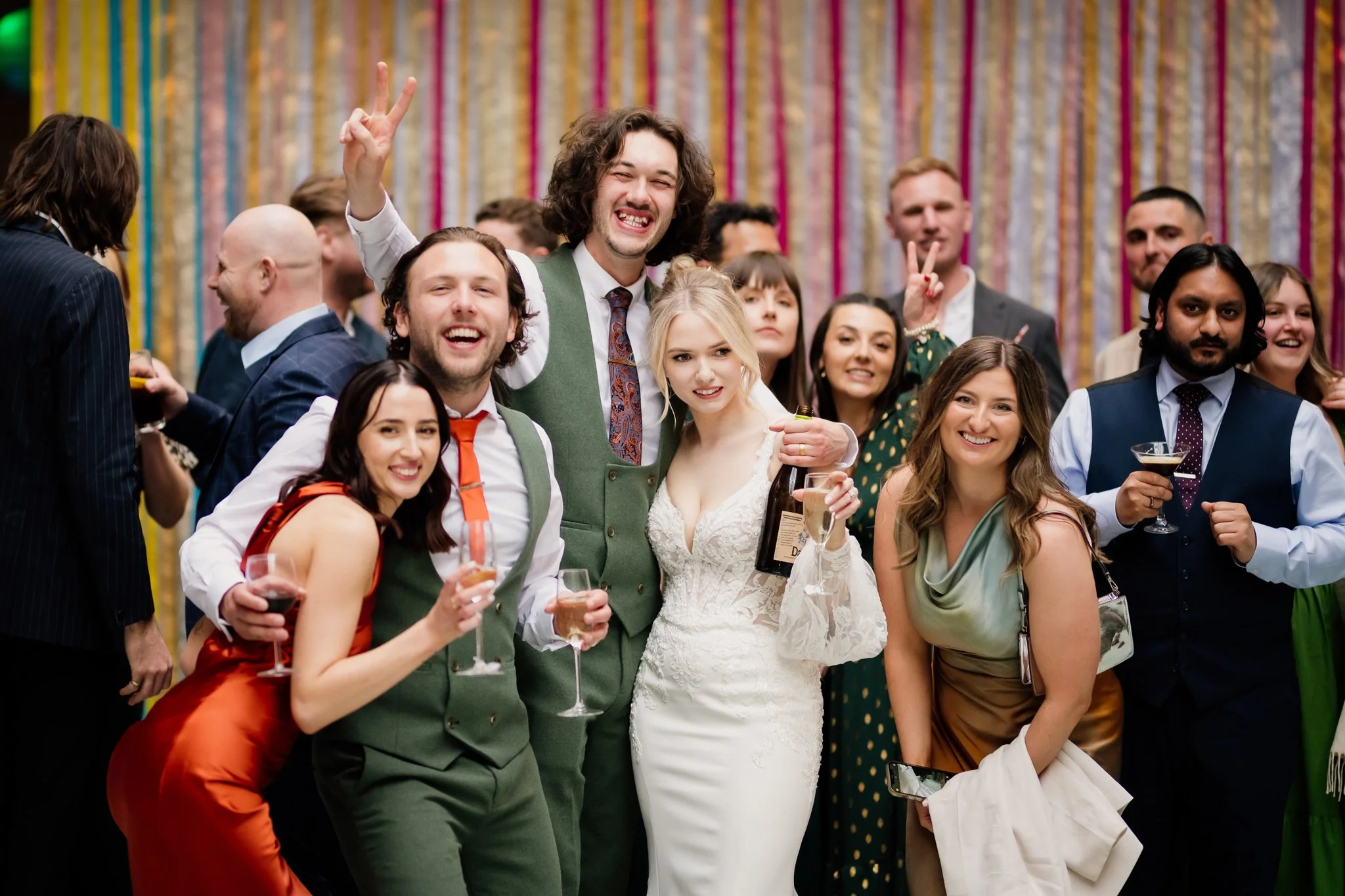
This photo from Abi and Lewis’ wedding at Manchester’s Victoria Baths is kind of a mix of candid and posed - they were posing for a friend, so I hopped in and captured it too!
If you’ve been looking for a wedding photographer, chances are you’ve come across words like posed, candid, and documentary, sometimes all used in the same sentence. Photographers often use those words across our websites and social media to describe the work we create, and you’ll often find lots of different types of photos being described as ‘candid’ or ‘documentary’. It can be confusing if you don’t know what these terms mean!
It’s important to understand what wedding photography style you like before you book your photographer, otherwise you may end up disappointed with both the experience on the day and the final photos. A photographer’s style affects how they interact with you during your wedding, what they may or may not ask you to do, what they might expect you to prepare in advance, the way they interact with your guests, how they actually take the photographs, how they edit photographs and how they choose which photographs to include in your final gallery.
I get that this might feel like a lot right now - especially if you’re reading this and not currently sure what kind of wedding photography you want! So let’s break this down.
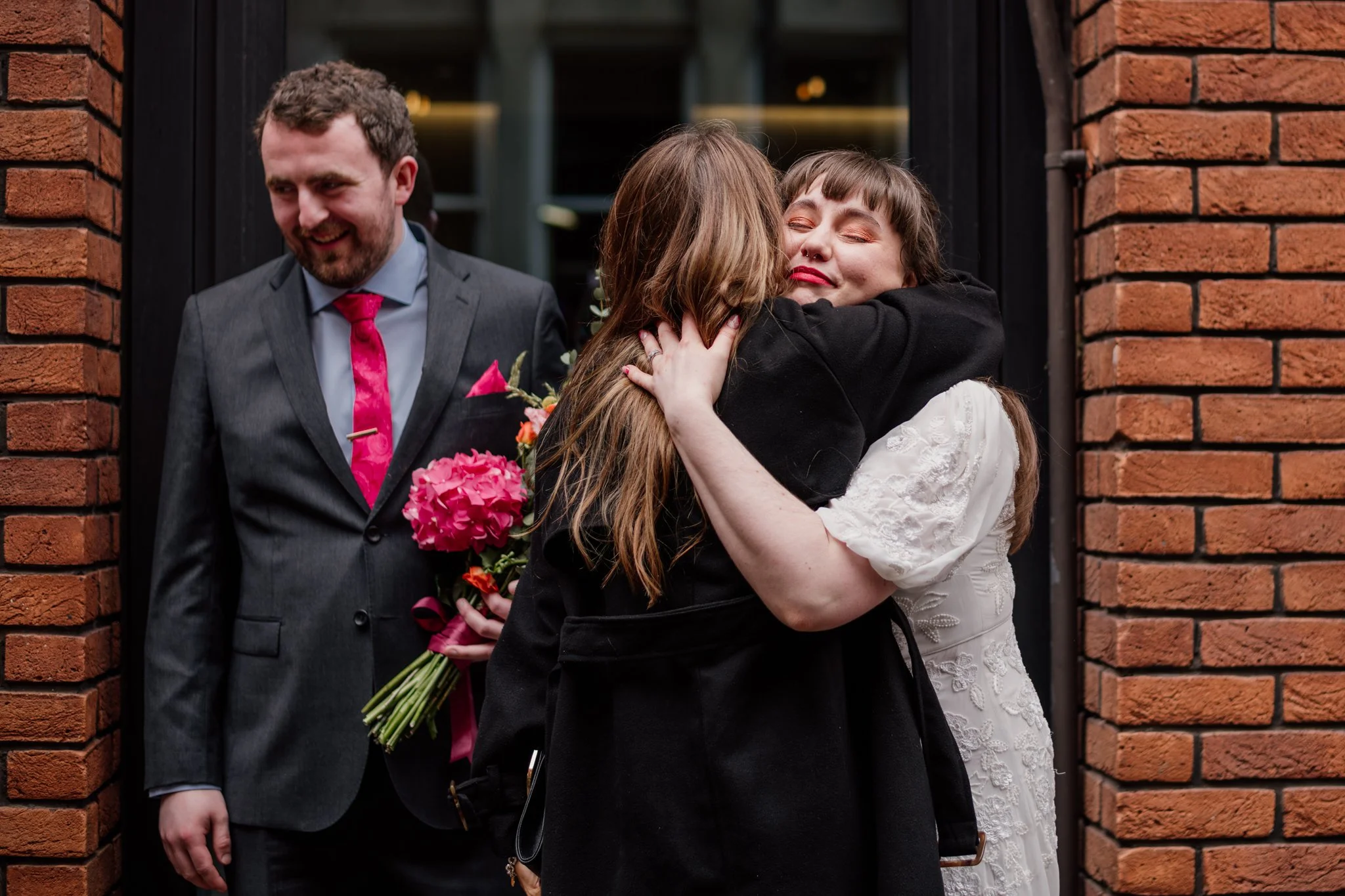
A classic example of a candid photo, as Ellie & Matt meet their guests following their wedding ceremony at Manchester Registry Office.
What is candid (or documentary) wedding photography?
Candid photography is all about capturing moments as they happen, without interference. No posing, prompts or instructions, just natural storytelling that reflects what’s really happening at any given moment. This is probably my favourite type of photography, as it allows people to forget the camera is there and just be themselves, which is something I LOVE to capture on a wedding day!
Some examples of candid moments that might happen on a wedding day:
A parent’s tears during the wedding ceremony
Laughter during speeches
Kids playing during the drinks reception
A bride showing her friends her wedding ring
Hugs, kisses and all that gorgeous natural emotion that unfolds without anyone asking!
Candid photography allows your photos to feel less like a photoshoot and more like freezing real moments.
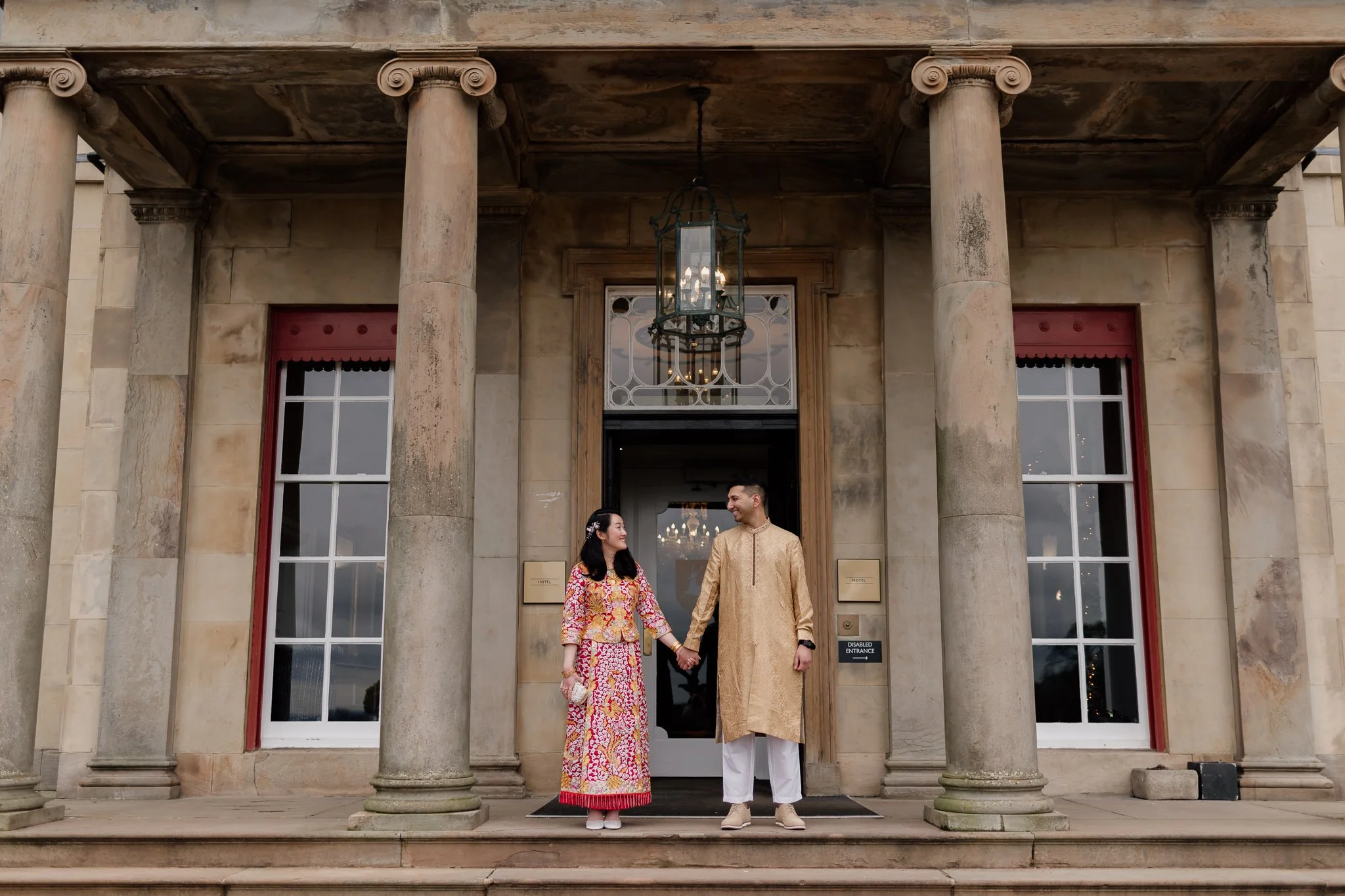
A sweet posed moment with Mei and Haroon at Shrigley Hall Hotel.
What is posed wedding photography?
Posed photography is exactly what it sounds like - the photographer gives you specific directions on how to stand, where to look, and what to do to achieve a particular ‘look’, and may come to you regularly throughout your wedding day to ask you to stand in a certain way or create a particular moment. Posing can be useful for things like group photos or key photographs a couple really want, such as an under-the-veil photo or their own version of a photograph found on Pinterest. Some photographers also have their own ideas for poses that they may ask their couples to do.
Think:
Looking directly at the camera
Being told where to put your hands
Carefully arranged group shots
There’s absolutely a time and a place for this, especially when it comes to family photos. It’s efficient, organised and makes sure you get those important “everyone’s looking and smiling” images - or what I like to call the mantelpiece shots.
But when everything is posed, it can sometimes feel a bit stiff or unnatural and can make being in front of the camera feel uncomfortable. I tend to do very few posed photographs (other than groups and any particular photographs that my couples specifically want) and when I do, I always keep them as fun and natural as possible so people don’t feel uncomfortable or overwhelmed in front of the camera.
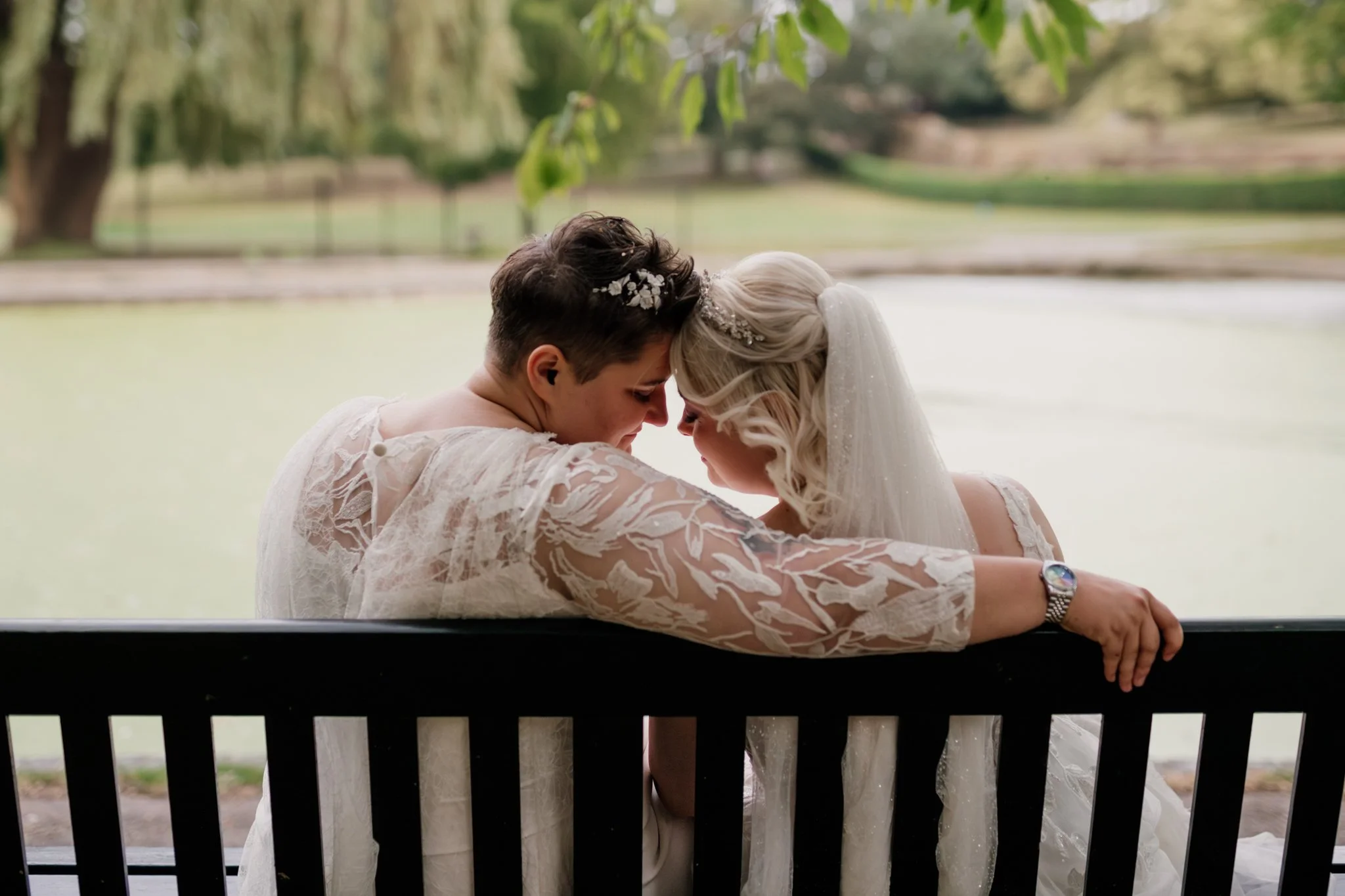
This gorgeous moment came from the simple prompt to “sit and think about the fact that you’re married now”. The rest came naturally!
What is prompted wedding photography?
Prompted photography sits somewhere in the middle of candid and posed. Instead of just letting moments unfold naturally or placing you in a fixed pose, your photographer gives you something to do that feels natural, easy and fun. Prompting is excellent for couples who are maybe a little less comfortable in front of the camera and feel struck by that “what on earth do I do with my limbs” feeling of acute self consciousness that so many of us feel as soon as a camera is pointed our way! Prompts give you something to do with yourselves to distract you from any potential awkwardness and put you at ease, helping you to feel comfortable in front of the camera.
Some examples might be:
“Walk towards me and chat to each other”
“Give them a squeeze”
“Whisper something ridiculous in their ear”
“Go for a walk and lean into each other”
You’re not being positioned like a mannequin, but you’re also not being left completely to your own devices.
This often creates photos that feel more natural and relaxed, while still having a bit of guidance. Prompting is something I use a lot with my couples, but generally only during couples’ portraits.
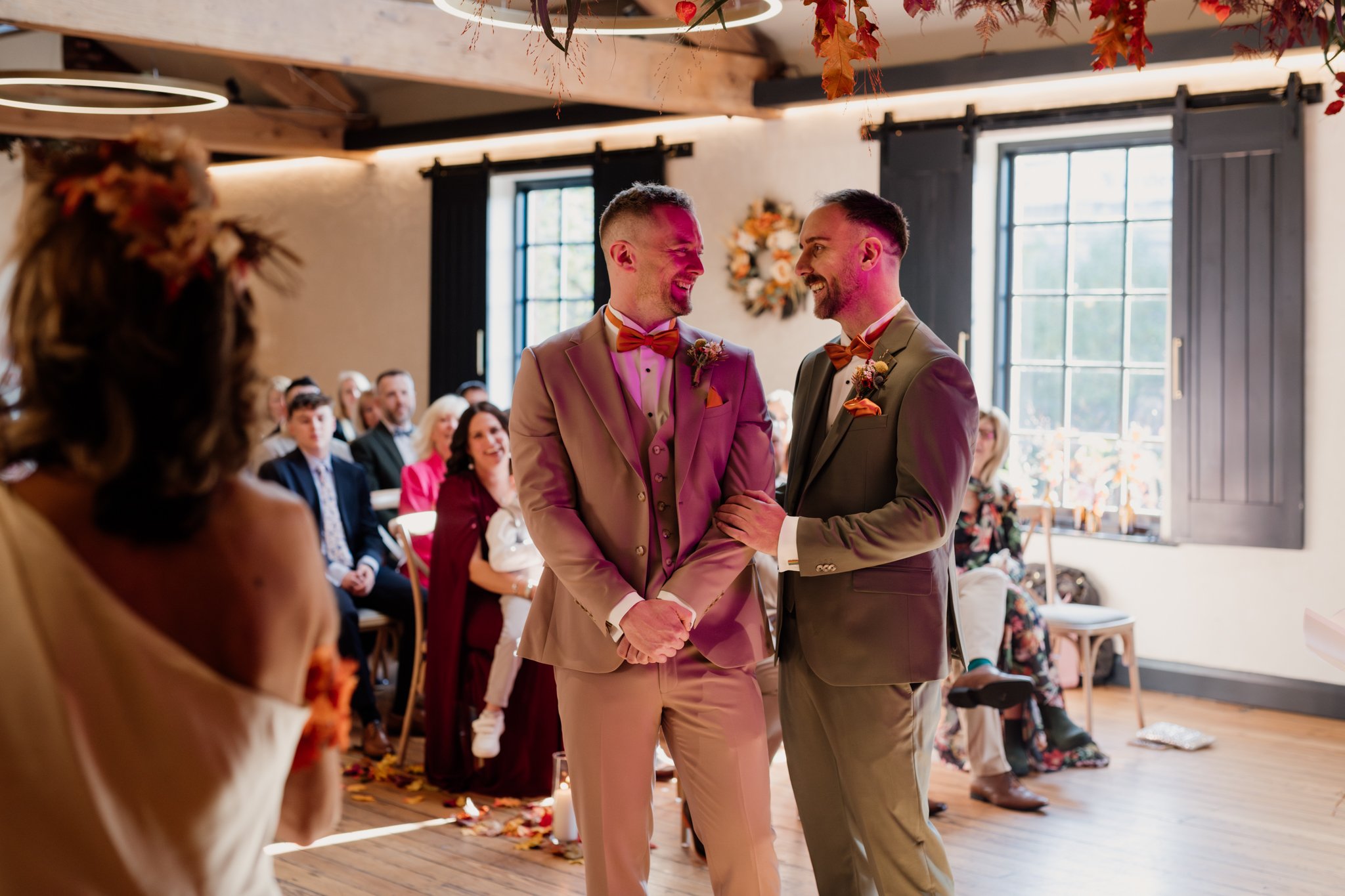
A gorgeous candid moment of Lee and Rob reacting to a reading during their wedding ceremony at The Castlefield Rooms.
So which one is best?
Honestly, none is ‘better’ than the others! Photography, like all art, is subjective and what really matters is what YOU like best.
Most weddings also naturally include a mix of all three:
Posed for group photos
Prompted for some couple portraits
Candid for everything in between
The main consideration is how you want these three approaches balanced for YOUR wedding photos - some photographers will almost exclusively photograph posed moments, whilst others shoot solely candid. If you’re not sure how a photographer you like works, ask them!
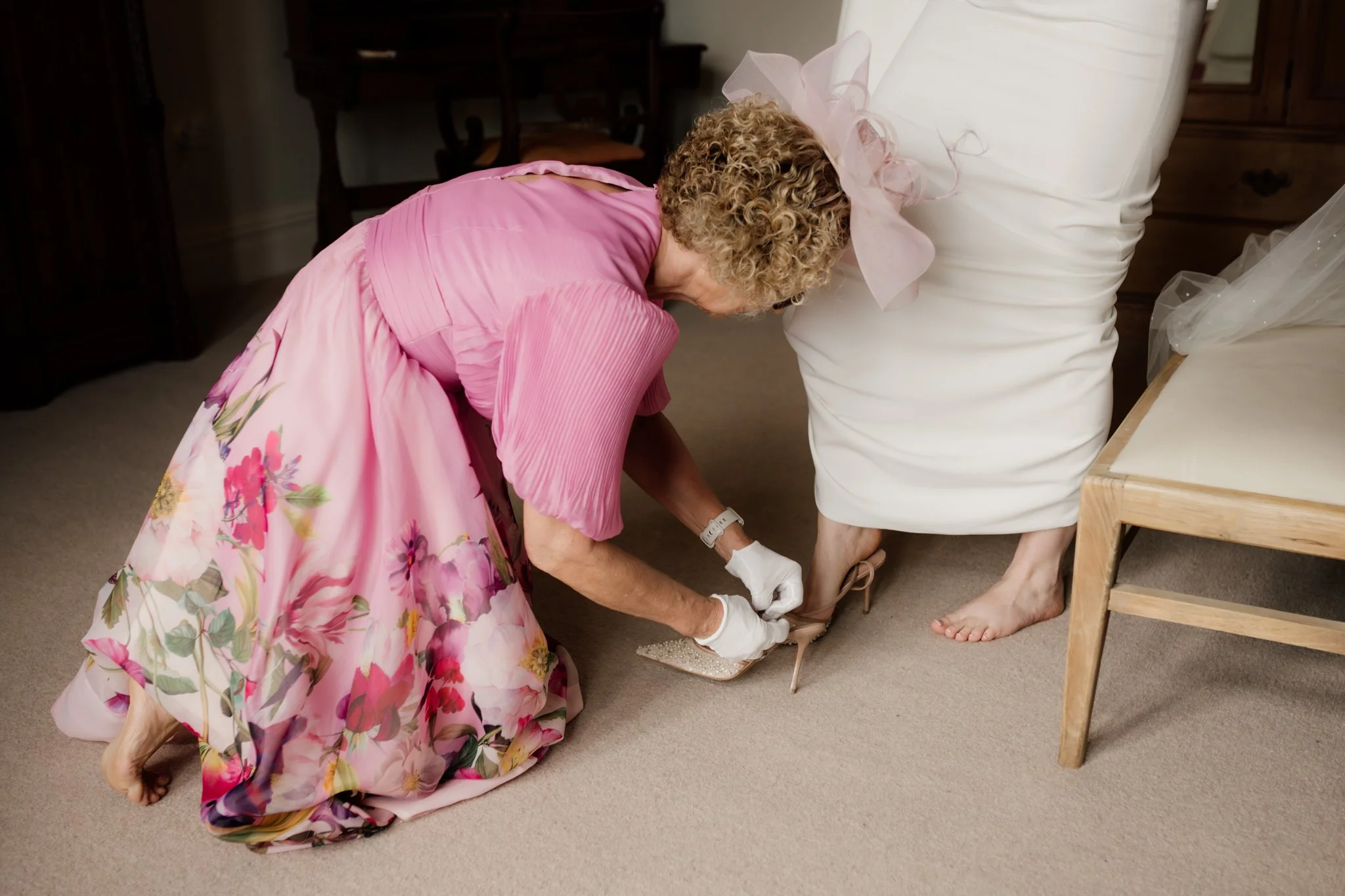
A prompted moment from Emily’s bridal prep at Wyresdale Park.
My approach to wedding photography
My number one priority when it comes to photographing a wedding is to deliver photos that feel how it felt on the day. I love to capture the raw emotions, the laughs, the silly dances, the tiny looks, the hand holds, the shoulder touches - all the things that are unique to that couple and that group of people. I think of myself as a storyteller as well as a photographer, and for that reason a candid approach is my favourite, with a sprinkling of prompts in those moments where a touch of guidance or reassurance might be needed.
To give you a more tangible idea of how this might look in practice, here’s an example of how I might tap into different styles during a wedding day:
Prep: 90% candid, I may move some items or tidy areas, turn lights off in favour of natural light, etc. I’ll generally ask who will be helping you do final touches like shoes, buttons, pocket squares, etc. and capture this as it naturally unfolds. I may ask a key member of the wedding party to straighten bow ties, fix a necklace, etc. if these kinds of moments haven’t happened naturally.
Ceremony: Capture that magic exactly as it happens babyyy.
Confetti: I will take the lead here and arrange guests into a couple’s desired setup (e.g. tunnel or horseshoe), give directions on how best to throw confetti and then let the couple know when to walk. A mixture of posed and candid- positioning is posed, but reactions, kisses, movement, etc. are to left to happen as they happen.
Drinks reception: Candid all the way. Hugs, kisses, laughs, ring show-offs, the whole shebang in all its natural glory.
Group photos: Posed according to the photo list that my couple provides. I may give prompts like “everyone look at X” or “X & Y, have a quick kiss for me”. I encourage people to have fun and be themselves throughout, and also snap those candid in-between moments.
Couples’ portraits: A mix of candid and prompted. I tend to give my couples a few minutes to breathe, have a chat and just be together while I sort my settings out, and I’ll snap some candids during that time. I then tend to provide very loose guidance such as “let’s have a stroll down this path” or “face each other, take a deep breath, think about the fact you’re MARRIED now and do whatever feels natural”. Small prompts like this provide support whilst giving space for couples to respond in whatever way feels natural to them.
Speeches: Candid!
Cake cut: This tends to happen in much the same way at every wedding and is kinda posed, I suppose? I may give some guidance on which side of the cake to stand on (usually depending on what’ll be in the background of the photos or where the light is) and let the couple take it from there.
First dance: Candid!
Dancefloor: Always candid!
Plus HEAPS of candids during all those gorgeous in-betweeny moments throughout the day.
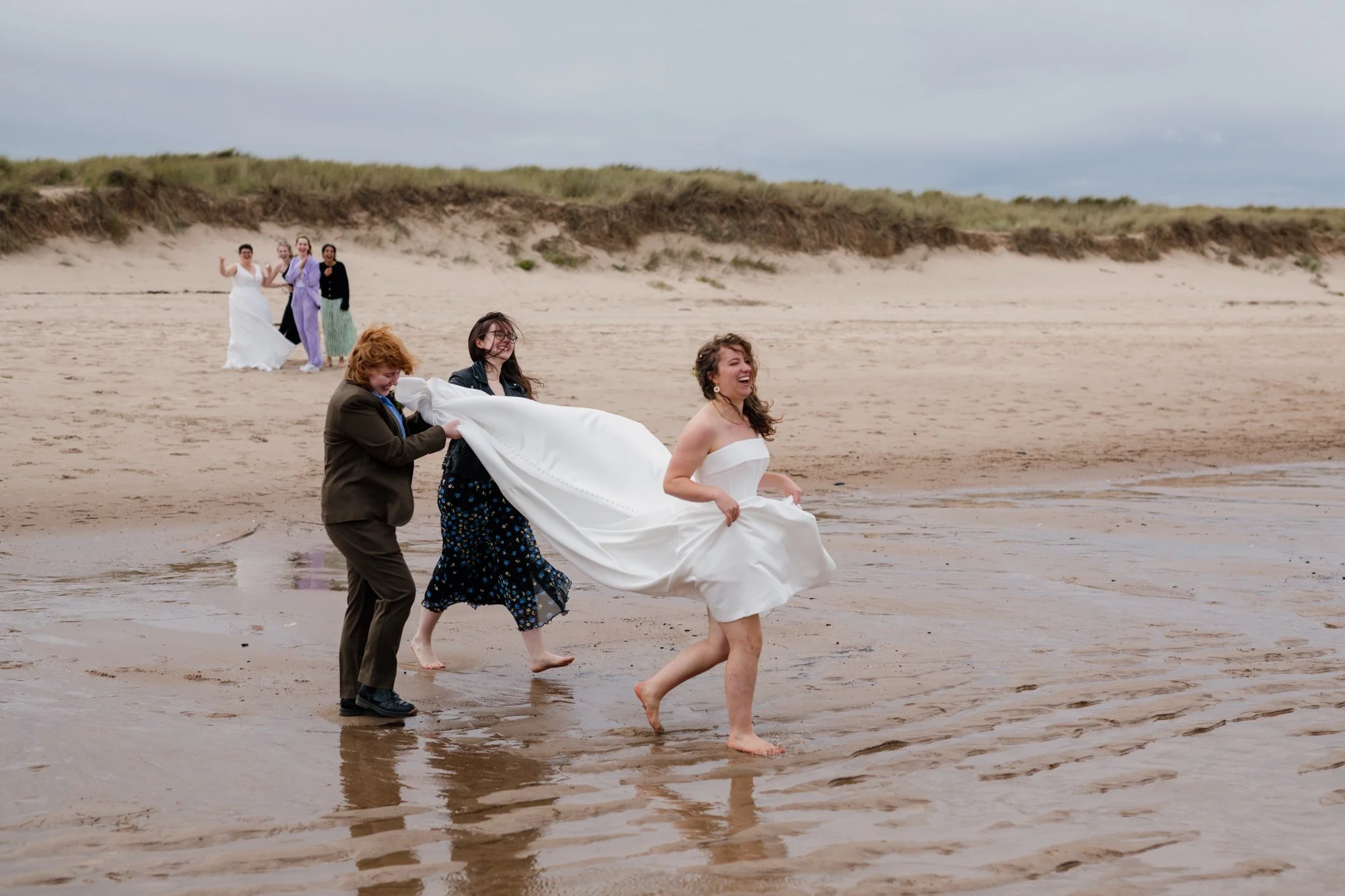
A candid moment from Yasmine and Eilidh’s magical day at The Barn on the Bay, Northumberland.
The bottom line
You don’t need to memorise photography terminology or have all the answers - most of this stuff is just about how it feels for you, and what feels like a good fit, because when you feel comfortable, everything else falls into place! If you’re not sure from their photographs how a photographer you like works and what their approach is, just ask them - they’ll always be happy to talk you through it and answer any questions.
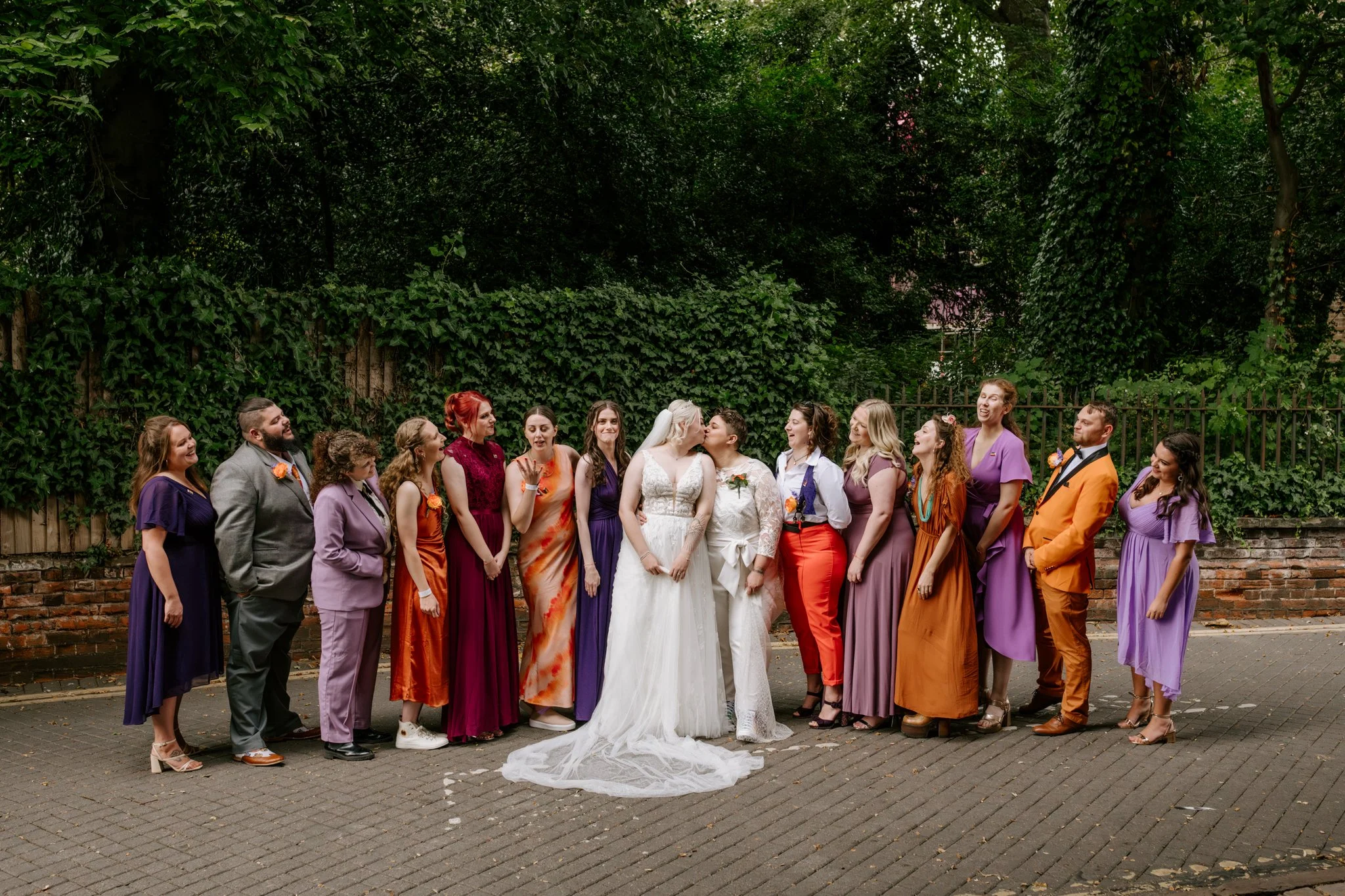
A gorgeous posed group photo with Georgie, Katy and their loved ones.
FAQ
What is the difference between candid and posed wedding photography?
Candid wedding photography captures moments exactly as they happen, without any direction. Posed wedding photography is more structured, with the photographer guiding you on where to stand, what to do, and how to look. In short, candid is about real moments unfolding naturally, and posed is about creating a specific image.
What is prompted wedding photography?
Prompted wedding photography sits somewhere in the middle. Instead of placing you in a fixed pose, your photographer gives you something simple to do, like walking together or having a chat, so you can relax and interact naturally. It’s a really lovely option if you want natural-looking photos but don’t want to feel completely left to your own devices.
Do wedding photographers use a mix of styles?
Most do, yes. Even photographers who describe themselves as “documentary” will usually include some posed group photos, and often use prompts during couple portraits. It’s less about choosing one style and more about how much of each you want throughout your day.
Which wedding photography style is best?
There isn’t a “best” style - it just depends on what feels right for you. If you love natural, in-the-moment photos, you’ll probably be drawn to candid work. If you like more polished, traditional images, you might prefer posed. And if you want something relaxed but with a bit of guidance, prompted might be your sweet spot.
Will I need to know how to pose?
Absolutely not. A good photographer will guide you in whatever way you need, whether that’s giving you gentle prompts or stepping back and letting things unfold naturally. You don’t need to practise or prepare - just show up as yourself and the rest will follow.
How do I know which style a photographer uses?
The best place to start is their portfolio. Look at full wedding galleries if you can, not just Instagram highlights, so you can get a feel for how they photograph a whole day. If you’re still not sure, just ask. Any good photographer will be happy to explain how they work and what you can expect.
If you’re leaning towards natural, candid photos but still want a bit of guidance when you need it, that’s exactly how I work. You can have a nosey at my portfolio or get in touch if it feels like a good fit.